 Traffic in Sweden used to drive on the left. This was changed in 1967 to bring Sweden into line with its neighbours. One effect of this change was the closure of Stockholm's tram system.
A heritage tram service was restored in 1991 on the Djurgårdslinjen, linking the city centre with museums on the island of Djurgården. Heritage trams operate at weekends from the end of March to mid-December, with a daily service operating during the high summer season.


 The heritage vehicles aren't the only trams to be found on Stockholm's streets today. Modern trams entered service in 2000 on the Tvärbanan, an orbital route through Stockholm's western and southern suburbs.
  Part of the Tvärbanan route runs on-street, often segregated from general traffic, but there are also sections on reserved track.
Since my visit, modern trams have reached Stockholm city centre, on a line which shares part of its route with the heritage trams on the Djurgårdslinjen. There are plans to expand the tram system further.


branded as Blåbuss (blue bus). Articulated vehicles are used. Needless to say, they carry a blue livery.


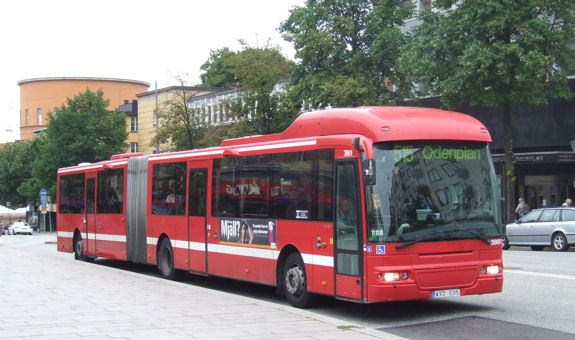


Ticketing is integrated between bus, tram, metro and rail networks. Fares are based on a coarse zonal system, with a single zone covering inner and central Stockholm. A single fare is valid for interchanges for up to an hour (two hours for a 3-zone ticket, valid over a wider area), and SL tickets are accepted on the heritage trams. Tickets are sold at rail and metro stations and at newsagents. They cannot, however, be bought on board buses - you must buy your ticket from a machine, newsagent or metro station before boarding.
Finally, Stockholm has a transport museum, situated a little to the south of the city centre.
